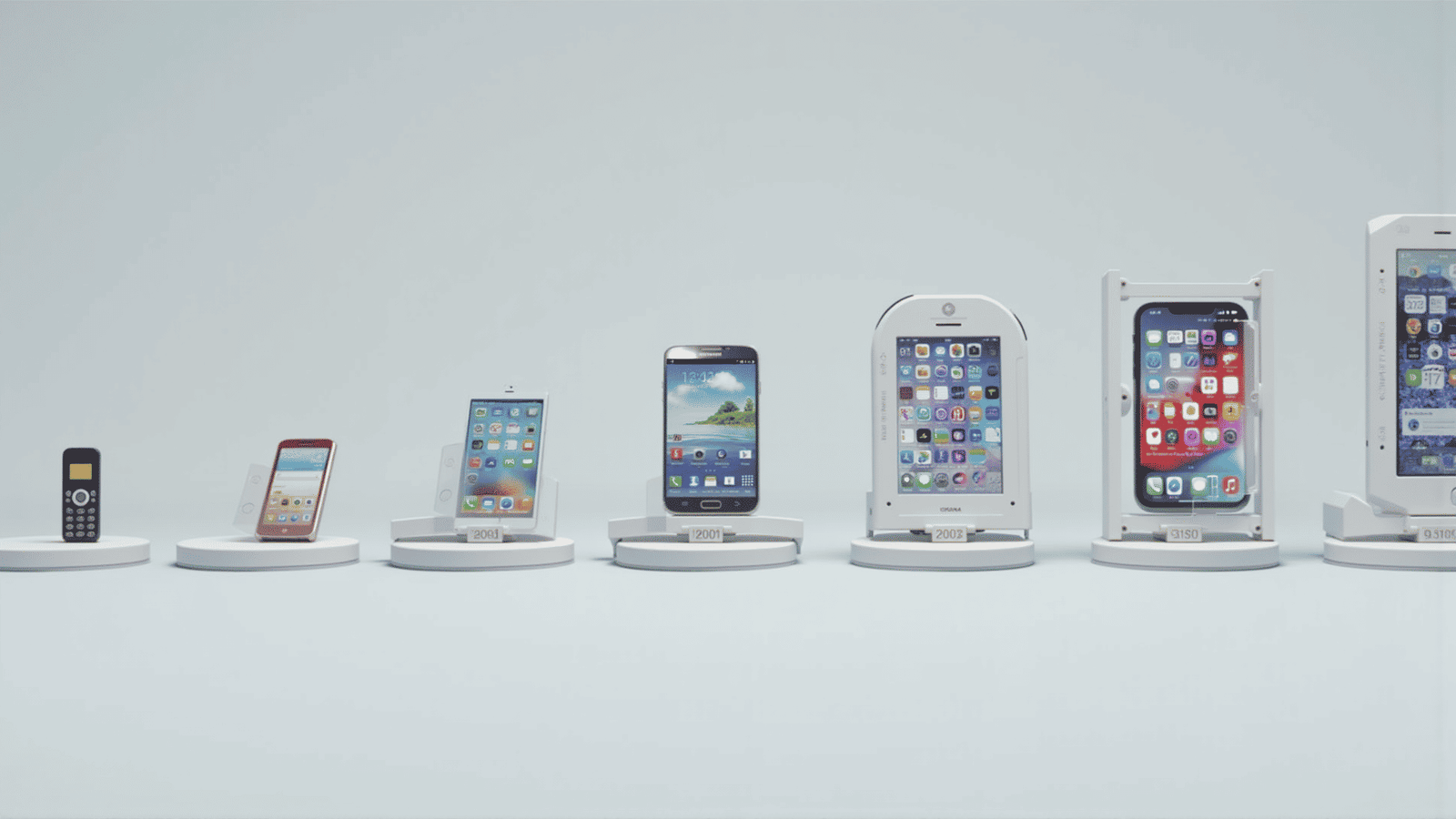
The development of interfaces for mobile applications has been a fascinating journey marked by continual innovation and adaptation. These interfaces have dramatically transformed from their rudimentary beginnings into sophisticated, user-friendly designs that we interact with today. By examining this evolution, we can appreciate the focus on aesthetics and usability that defines the user experience.
Initially, with the advent of early mobile devices, interfaces were primarily text-based. The limited screen size and functionality necessitated simple interfaces where usability was prioritized over design. Buttons were small, and navigation was often cumbersome. Despite these challenges, these early interfaces laid the groundwork for future advancements by emphasizing function and basic user interaction.
As technology advanced, so did screen quality and device capabilities, allowing for more visually appealing designs. The introduction of touchscreens was a turning point. Designers could now use gestures, swipes, and taps, making interaction more intuitive and natural. This period saw the rise of skeuomorphism, a design principle that uses familiar real-world objects and textures to make digital interfaces more relatable. It was popularized by various tech giants, who used it to ease users into the digital mobile world.
The era of skeuomorphism eventually gave way to flat design, characterized by minimalism and a focus on clarity and simplicity. This shift was driven by a desire for fast, efficient navigation and cleaner aesthetics. Flat design removed unnecessary embellishments, emphasizing functionality and ease of use. This change was widely adopted across the industry and remains a fundamental design principle today.
As user expectations evolved, so too did the demand for interfaces that are not only functional but also pleasing to the eye. This led to the integration of motion design and animations, which brought interfaces to life by offering feedback and guiding users through processes. These animations made interactions feel more engaging and provided visual cues that enhanced usability.
The trend toward personalization further pushed the evolution of interfaces. Applications began to offer customizable themes, modes, and layouts, allowing users to tailor their experiences to their preferences. This emphasis on personalization extended to dynamic adjustments that adapt to user behavior, making interactions more seamless and intuitive.
Today, the design of interfaces is focused on inclusivity and accessibility. With a wide range of users being digital natives, modern interfaces aim to be universally understandable, accommodating different abilities and preferences. This includes features like voice commands, customizable font sizes, and light/dark modes, ensuring that as many people as possible can enjoy a smooth experience.
In summary, the journey from simple, text-based interfaces to the complex and engaging designs we see today highlights a continual pursuit of balance between aesthetics and usability. As technology continues to advance, future developments in interfaces will likely focus even more on personalization and inclusivity, further enhancing our interaction with digital devices. This ongoing evolution underscores the importance of placing the user at the heart of mobile application design.